
My Child Learned a Skill in Therapy — Why Doesn’t It Show Up at Home?
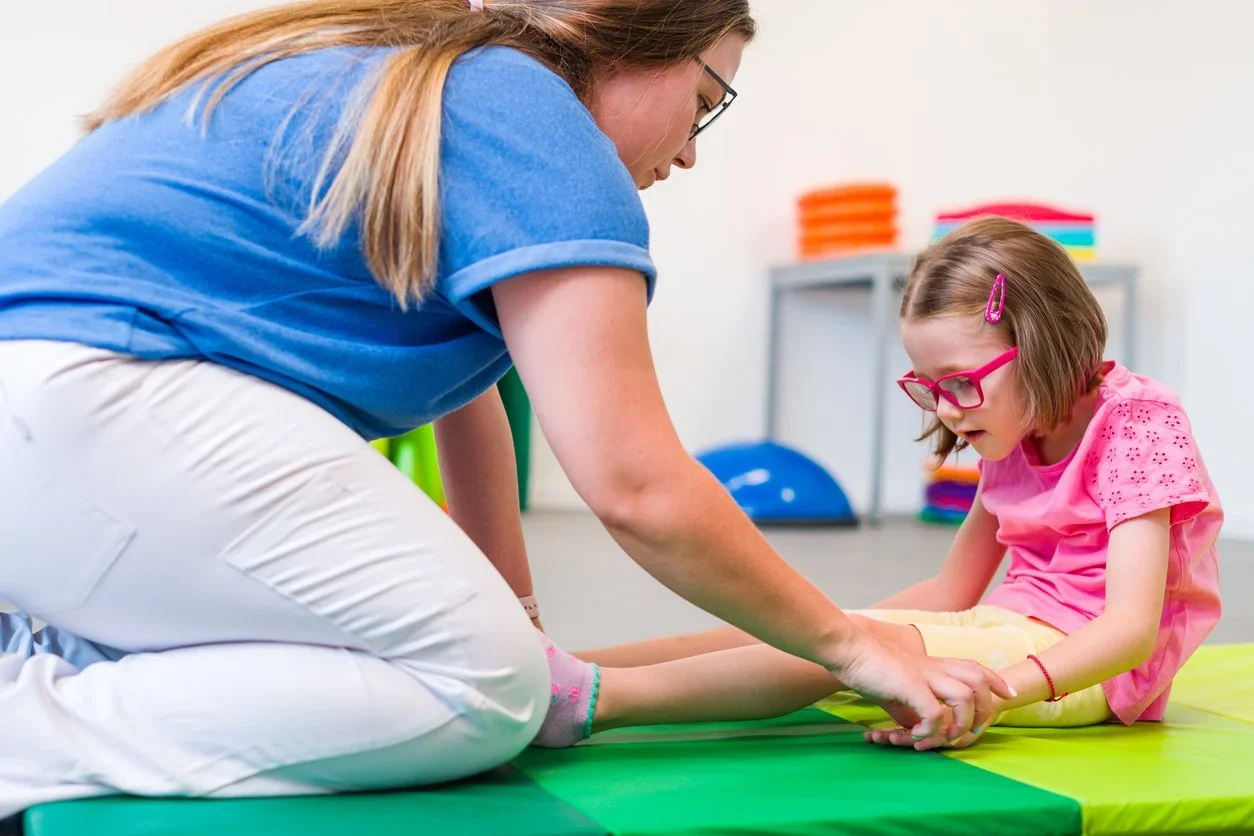
One of the most frustrating experiences for parents is hearing that their child “did great in therapy”…
Only to go home and realize the skill doesn’t seem to appear anywhere else.
Maybe your child:
Walks differently during sessions than at home
Performs a movement once, then never repeats it
Seems capable in therapy but struggles in daily life
Shows progress temporarily that later disappears
This can leave parents feeling confused and discouraged.
Because if a child can do something once… shouldn’t they be able to do it again?
Not necessarily.
And the reason has everything to do with how the brain learns.
Performing a Skill Is Not the Same as Owning It
A child may successfully complete a task during therapy without the nervous system truly integrating that skill.
This is an important distinction.
Sometimes children are:
Following prompts
Repeating memorized patterns
Compensating with effort
Performing within a structured environment
But once the environment changes, the nervous system may no longer know how to recreate the movement naturally.
That’s why a skill may appear briefly… and then disappear.
The brain has performed the action.
But it may not yet have learned it in a flexible, adaptable way.
Why Skills Don’t Always Generalize
For learning to carry into everyday life, the brain must develop organization—not just repetition.
The nervous system needs to understand:
How to adapt movement in different situations
How to make small adjustments automatically
How to coordinate movement without constant effort
If a skill only exists within one structured setting, the brain may not yet know how to use it elsewhere.
Parents often notice this when:
A child walks differently at home than in therapy
Skills disappear under stress or fatigue
Progress seems inconsistent from day to day
Movements require intense concentration
This inconsistency is not laziness.
It often means the nervous system is still relying on effort rather than true organization.
Why Repetition Alone Has Limits
Traditional Occupational Therapy (OT) and Physical Therapy (PT) often emphasize repetition and practice.
And repetition can absolutely help in some situations.
But repetition does not automatically create flexible learning.
A child may become better at performing a specific task in a specific setting… without the brain building a broader understanding of movement.
This is where many families begin feeling stuck.
They see moments of success.
But those moments don’t consistently transfer into real life.
Real Learning Creates Flexibility
When the brain truly learns something, the result is flexibility.
The child can:
Adapt the skill to new environments
Use it spontaneously
Adjust without overthinking
Carry the movement into everyday life
This type of learning depends on the nervous system becoming more organized—not simply more practiced.
And organization happens through awareness, variation, and the brain noticing differences.
A Different Way to Support Learning
The Anat Baniel Method® NeuroMovement® approaches development differently.
Rather than focusing on drilling specific skills, NeuroMovement® focuses on helping the brain become more capable of learning itself.
At MoveAbilities in Portland, sessions are designed to:
Introduce gentle variation
Help the brain notice subtle differences
Reduce unnecessary effort
Expand movement possibilities
Improve overall nervous system organization
Instead of asking:
“How do we get this child to perform this task?”
The focus becomes:
“How do we help the brain become more adaptable and capable overall?”
That shift often changes how learning transfers into daily life.
Families can explore support through in-person lessons, virtual sessions, or guided movement classes.
Why the Brain Learns Through Difference
One of the foundational principles of the Anat Baniel Method® NeuroMovement® is that the brain learns through noticing differences.
Not force. Not pressure. Not endless repetition.
Differences.
When the nervous system experiences new variations in movement, it gains more information about:
Coordination
Timing
Balance
Spatial awareness
Efficiency
This allows the brain to build richer internal maps.
And richer maps create more adaptable movement.
What Parents Often Notice
As learning becomes more integrated, parents often begin noticing changes like:
Skills showing up spontaneously at home
Less effort required during movement
Greater consistency across environments
Improved confidence
More natural movement patterns
These changes often feel more sustainable because the nervous system is no longer relying solely on memorized performance.
The brain is learning how to adapt.
When Therapy Success Doesn’t Match Real Life
It can be discouraging when therapy progress doesn’t seem to carry over into everyday life.
Parents may begin wondering:
Are we doing enough?
Are we doing the right kind of therapy?
Why doesn’t the progress stick?
If your child is not progressing consistently in therapy, it may help to explore alternatives to OT and PT in Portland.
Sometimes the issue is not motivation or effort.
Sometimes the nervous system simply needs a different way to learn.
Can NeuroMovement® Be Done Without OT or PT?
Yes — many families choose to focus entirely on the Anat Baniel Method® NeuroMovement® without combining it with occupational or physical therapy.
Because NeuroMovement® works directly with how the brain organizes movement and learning, it can stand on its own as a complete approach.
Some families combine approaches.
Others simplify in order to reduce overwhelm and support clearer learning.
At MoveAbilities, every plan is individualized around the child and family.
Learning Should Extend Beyond the Therapy Room
When the brain truly learns, change does not stay confined to one environment.
It begins to appear naturally:
At home
At the playground
During daily routines
In spontaneous movement and exploration
That’s often the difference between performing a skill… and truly integrating it.
And for many children, that difference changes everything.
Curious Whether a Different Approach Could Help?
If your child seems successful in therapy but struggles to carry those skills into everyday life, there may be another way to support learning.
You can contact Kathy at MoveAbilities to ask questions or explore whether NeuroMovement® may be a good fit for your child.