
Should I Wait and See — Or Start Supporting My Child Differently Now?
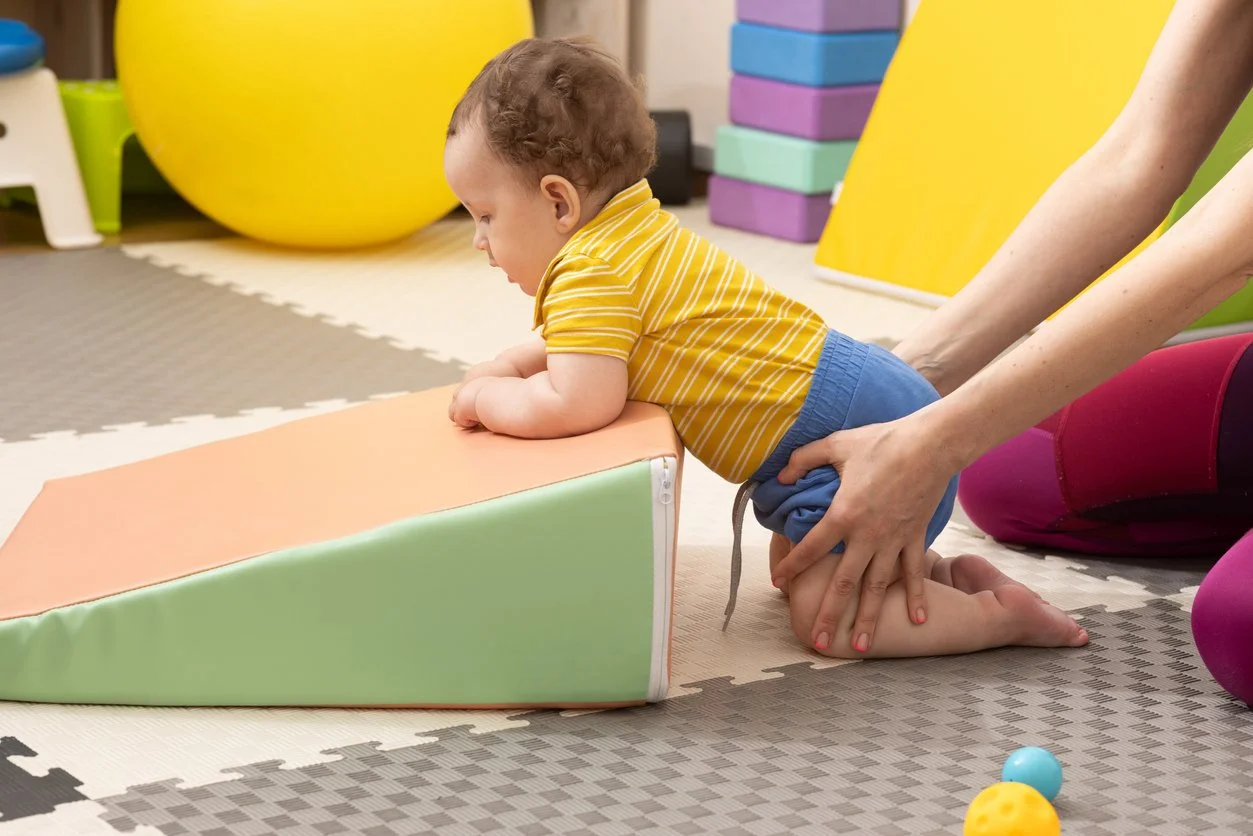
If you’ve recently been told:
“Let’s wait and see how things develop”
“Every child develops at their own pace”
“It’s too early to know for sure”
you may be feeling a mix of reassurance… and uncertainty.
You might notice small things:
Your child seems a little stiff or floppy
Movement feels effortful
Milestones are not quite lining up
Something just feels different
But without a clear diagnosis, it can be hard to know what to do next.
So you’re left with a quiet question:
Should I wait… or should I do something now?
Why “Wait and See” Is So Common
“Wait and see” is often given with good intention.
It can help avoid unnecessary worry.
It allows time for natural development to unfold.
And in some cases, children do catch up on their own.
But for many parents, it doesn’t fully answer the question.
Because even while you’re waiting—you’re still noticing.
You’re observing how your child moves.
How they respond.
How much effort things seem to take.
And that awareness matters.
What Parents Often Notice Early
Before any formal diagnosis, many parents describe similar observations:
Movement looks harder than expected
Their child uses more effort than other children
There is stiffness, floppiness, or inconsistency
Transitions between positions feel difficult
Their child seems unsure in their body
Their child does not move much, or they seem to rely on a limited set of movement patterns
These are not conclusions.
They are clues.
They are signals that the nervous system may still be organizing how movement works.
Movement Is a Learning Process
Every movement your child makes depends on the brain’s ability to:
Organize sensory input
Coordinate timing
Adjust balance
Create internal maps of the body
When that process is still developing, movement may look:
Effortful
Uneven
Limited in variation
It’s easy to think the solution is more practice.
But sometimes the brain needs something different than repetition.
It needs new experiences that help it learn more clearly.
The Real Question Isn’t “Wait or Act”
The real question is:
What kind of support helps my child’s brain learn best?
Waiting does not create learning.
And support does not have to mean pressure.
There is a middle ground.
You don’t have to rush into intensive therapy.
And you don’t have to do nothing.
You can choose a different kind of approach.
When Traditional Therapy Is Suggested
If concerns continue, many families are guided toward:
Occupational Therapy (OT)
Physical Therapy (PT)
These approaches often focus on helping children practice specific skills or movements.
For some children, this works well.
For others, parents begin to notice:
Their child works very hard
Progress feels slow or inconsistent
Movement still looks effortful
Skills don’t always carry over into daily life
This can lead to another question:
What if we’re doing the right thing—but not seeing the results we hoped for?
A Different Way to Support Early Development
The Anat Baniel Method® NeuroMovement® offers a different perspective on early development.
Instead of focusing on achieving specific milestones, NeuroMovement® focuses on how the brain learns movement.
At MoveAbilities in Portland, sessions are designed to:
Be gentle and non-forceful
Introduce small, meaningful differences in movement
Help the brain notice and organize those differences
Reduce unnecessary effort
Expand the child’s ability to create new possibilities
This approach does not rely on repetition or pressure.
It supports the brain’s natural learning process.
And for many families, that shift changes how progress unfolds.
Families can begin with options that feel manageable, including in-person lessons, virtual sessions, or guided movement classes.
Why Starting Early Can Matter
A brain can learn at any age.
And early experiences shape how that learning develops.
When the brain is given:
Gentle input
Clear information
Opportunities to notice differences
it can begin organizing movement more efficiently.
This doesn’t mean doing more.
It means offering the right kind of experience.
Early support can influence:
Coordination
Ease of movement
Confidence
Future learning patterns
Without increasing stress on the child.
What If OT or PT Doesn’t Feel Like the Right Fit?
Some families start traditional therapy and feel aligned with it.
Others begin to notice that something feels off.
If your child is already in therapy and progress feels slower than expected, it may be helpful to explore alternatives to OT and PT in Portland.
This doesn’t mean something is wrong.
It means you’re paying attention to how your child is responding.
And that awareness is one of the most important tools you have.
Can NeuroMovement® Be Done Without OT or PT?
Yes — many families choose to focus entirely on the Anat Baniel Method® NeuroMovement® without combining it with occupational or physical therapy.
Because NeuroMovement® works directly with how the brain learns and organizes movement, it can stand on its own as a complete approach.
Some families combine approaches.
Others simplify to avoid overwhelming the nervous system.
At MoveAbilities, every plan is individualized based on your child’s needs and your family’s preferences.
You Don’t Have to Choose Between Waiting and Doing Too Much
It can feel like your only options are:
Wait… or push.
But there is another path.
You can support your child’s development in a way that is:
Calm
Respectful
Brain-based
Focused on learning rather than performance
You can begin without pressure.
Without forcing outcomes.
Without overwhelming your child.
Curious What “Different” Could Look Like?
If you’re in the Portland area and wondering whether to wait or explore something new, you don’t have to make that decision alone.
You can contact Kathy at MoveAbilities to ask questions or talk through what feels right for your child.