
Why Does My Child Hate Therapy?
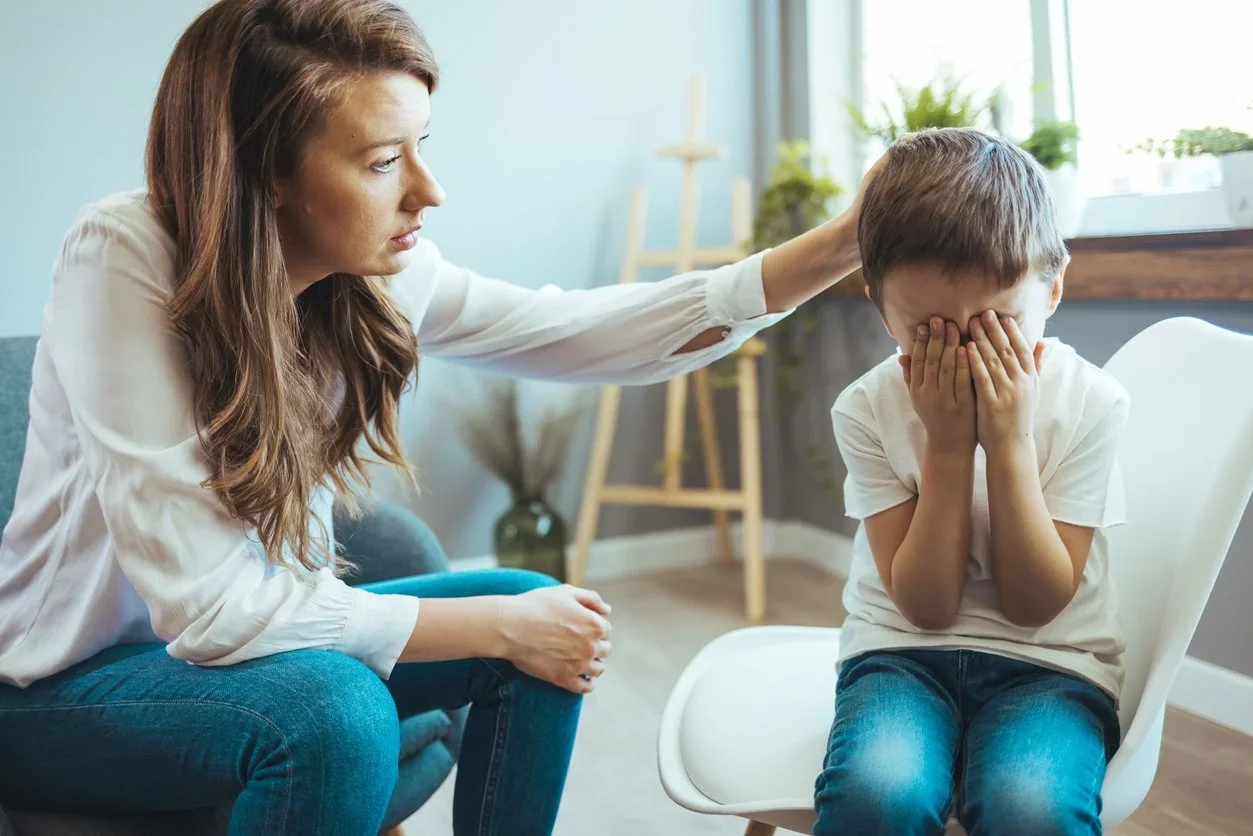
Few things are harder for a parent than watching their child cry on the way to therapy.
You know you're trying to help.
You believe the appointments are important.
But every session begins with resistance, anxiety, or tears.
Maybe your child:
Refuses to get out of the car
Cries when they see the therapy room
Shuts down during sessions
Melts down afterward
Says they don't want to go back
As a parent, this can leave you feeling torn.
Should you keep pushing because it's "good for them"?
Or is your child trying to tell you something important?
The answer isn't always simple.
But one thing is worth remembering:
A child who resists therapy is not necessarily resisting learning.
They may be resisting how learning feels.
Resistance Doesn't Always Mean Defiance
When adults see a child refusing therapy, it's easy to assume they're being uncooperative.
But children rarely wake up deciding they don't want to succeed.
Most children genuinely want to:
Move more easily
Play with friends
Become more independent
Make their parents proud
When they resist therapy, it's often because their nervous system is experiencing something that feels overwhelming.
That doesn't mean the therapy is "bad."
It means the brain may be responding to the experience differently than adults expect.
What Happens When the Nervous System Feels Overwhelmed?
Learning depends on the brain's ability to pay attention, notice differences, and adapt.
When the nervous system feels calm, children are more likely to:
Explore
Stay curious
Try new movements
Learn from experience
But when the brain feels overwhelmed, priorities change.
Instead of learning, the nervous system focuses on protection.
Parents may notice:
Crying
Freezing
Pulling away
Increased muscle tension
Difficulty concentrating
These are not signs that a child doesn't care.
They're often signs that the brain no longer feels ready to learn.
Why Therapy Can Become a Battle
Many therapy sessions involve repetition.
Children are encouraged to practice difficult movements over and over in hopes that improvement will follow.
For many families, this works well.
But for some children, repeated demands begin to feel like pressure.
The child may start anticipating that therapy means:
Hard work
Frustration
Constant correction
Tasks that feel impossible
Feeling unsuccessful
Over time, simply walking into the therapy clinic can trigger anxiety.
Parents often describe therapy becoming a weekly battle rather than a positive learning experience.
Learning Should Feel Different
One of the most important ideas in neuroscience is that the brain learns best when it can notice new information.
Curiosity supports learning.
Fear limits it.
This doesn't mean learning should never be challenging.
It means children often learn more effectively when they feel safe enough to explore rather than pressured to perform.
That difference can completely change a child's relationship with movement.
A Different Approach to Learning
The Anat Baniel Method® NeuroMovement® is built on the understanding that the brain learns through awareness, variation, and gentle exploration.
At MoveAbilities, lessons are intentionally different from what many families expect.
Rather than focusing on repetition and performance, lessons are designed to help the nervous system:
Notice subtle differences
Discover new movement possibilities
Reduce unnecessary effort
Build better organization
Learn without excessive pressure
Children are not expected to "push through."
Instead, the goal is to create an environment where learning feels possible.
Families can participate through in-person lessons, virtual sessions, or educational movement classes, depending on what best fits their needs.
What Parents Often Notice
Families frequently tell us that one of the first changes they notice isn't a new skill.
It's a different attitude.
Parents often report that their child becomes:
More relaxed
More curious
More willing to participate
Less fearful of movement
More confident trying new things
When the nervous system feels safer, learning often becomes easier.
Children who once resisted movement may begin exploring it on their own.
Does This Mean We Should Stop OT or PT?
Not necessarily.
Many children benefit from Occupational Therapy and Physical Therapy.
Some families continue those services while adding the Anat Baniel Method® NeuroMovement®.
Others choose to simplify their therapy schedule.
Every child is different.
The goal is not to replace one approach with another simply because resistance exists.
The goal is to understand what your child's nervous system needs in order to learn most effectively.
If therapy has become a struggle, it may be helpful to learn more about alternatives to OT and PT in Portland.
Understanding your options allows you to make thoughtful decisions based on your child's experience.
Can NeuroMovement® Be Done Without OT or PT?
Yes.
Many families choose the Anat Baniel Method® NeuroMovement® as their primary approach to supporting development.
Others combine it with Occupational Therapy, Physical Therapy, or other services.
At MoveAbilities, every child receives an individualized plan based on their needs, goals, and responses.
There is no one-size-fits-all path.
The focus is always on helping the nervous system learn in a way that feels supportive rather than overwhelming.
Your Child May Not Hate Learning
Parents sometimes worry that therapy resistance means their child isn't motivated.
But many children who resist therapy are deeply motivated.
They simply need a different learning experience.
One that invites curiosity instead of fear.
One that reduces pressure instead of increasing it.
One that helps the brain discover new possibilities rather than repeatedly struggling through the same ones.
Sometimes that change in approach transforms not only movement—but a child's confidence as well.
Curious Whether NeuroMovement® Could Help?
If therapy has become a weekly struggle for your child, you don't have to assume that's simply part of the process.
You can contact Kathy at MoveAbilities to learn more about the Anat Baniel Method® NeuroMovement® and explore whether it may be a better fit for your child's learning style.