
Why Your Child’s Best Learning May Not Happen During Therapy
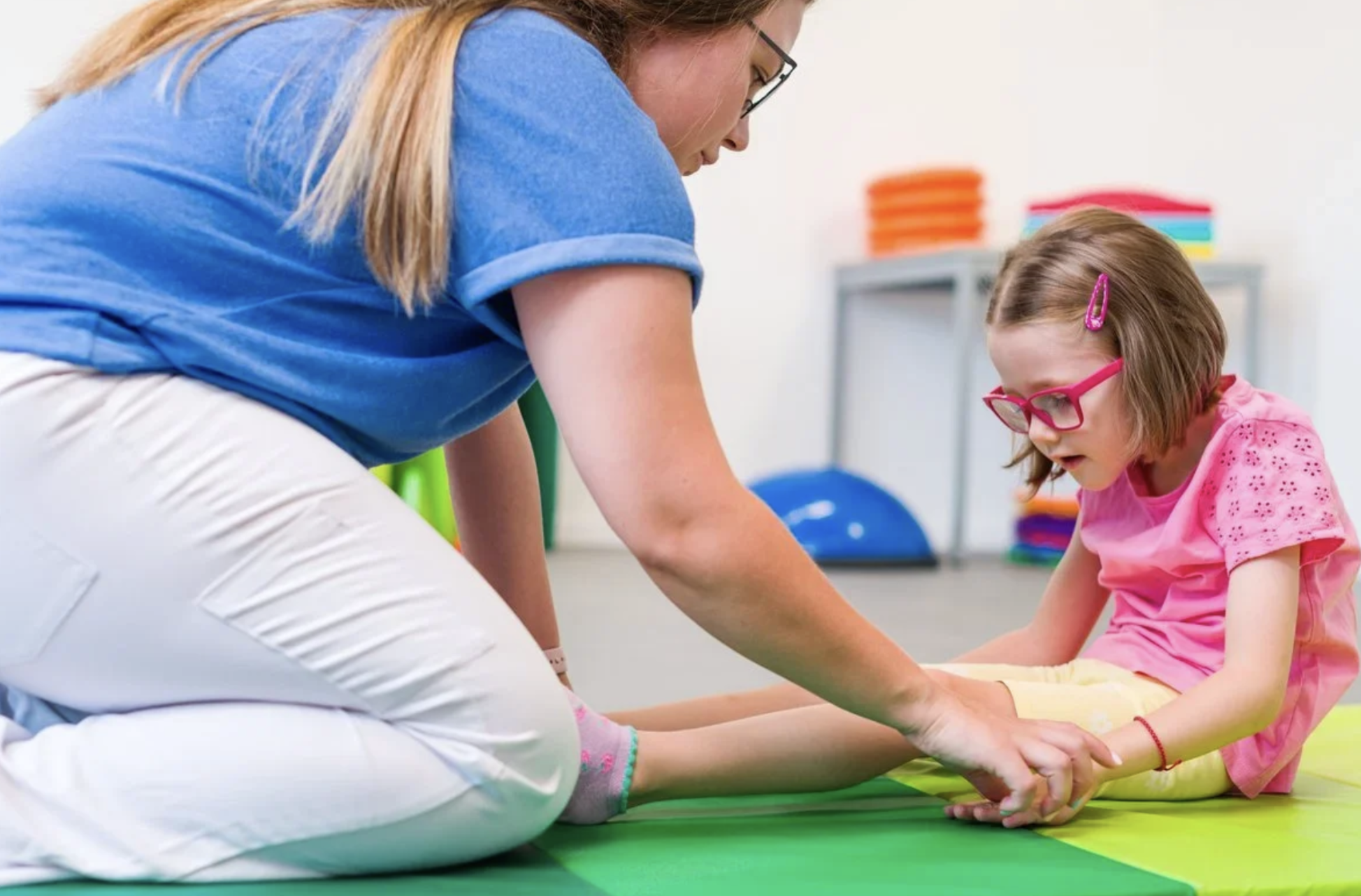
You spend 45 minutes watching your child during a session and wonder whether anything really changed.
There wasn't a dramatic new milestone.
They didn't suddenly stand independently.
Their walking didn't instantly transform.
Then something happens the next morning.
Your child gets off the floor differently.
At the playground, they attempt something they normally avoid.
During breakfast, reaching for a cup looks easier.
And you think:
“Where did that come from?”
For parents accustomed to measuring progress by what happens during therapy, these moments can be surprising.
But learning doesn't always announce itself while a child is having a lesson.
Sometimes the lesson gives the brain new information.
What happens with that information may become visible hours—or even days—later.
A Lesson Is an Experience, Not a Test
We're used to thinking about therapy in terms of performance.
A child practices something.
They improve.
We see the improvement.
That makes progress relatively easy to recognize.
But the Anat Baniel Method® NeuroMovement® isn't designed around repeatedly testing whether a child can produce a particular movement.
At MoveAbilities, a lesson is an opportunity for the brain to experience differences.
The immediate question isn't always:
“What can my child do now?”
A better question may be:
“What new information did my child's brain just receive?”
That changes what parents should expect to see.
New Information May Need Time
Imagine hearing a useful idea in a conversation.
You understand it at the time, but it isn't until later—perhaps while driving home or making dinner—that something clicks.
Suddenly, you see how that idea connects to something else.
The brain doesn't stop processing information when the conversation ends.
Movement learning can have a similar quality.
During in-person NeuroMovement® lessons, Kathy uses gentle variations in movement to help a child's nervous system notice distinctions it may not have recognized before.
The child isn't necessarily being taught, “This is the correct way to stand.”
Instead, the brain is receiving richer information about possibilities.
What it does with those possibilities isn't always immediately obvious.
The Playground May Tell You More Than the Therapy Room
If you want to know whether learning is becoming useful, watch your child when nobody is asking them to demonstrate anything.
Watch at home.
Watch on the playground.
Watch when they're playing with siblings.
Perhaps your child suddenly:
Reaches for something from a new position.
Finds a different way to get onto the couch.
Recovers from losing their balance without help.
Turns while walking instead of stopping first.
Explores a climbing structure they previously avoided.
Moves without the usual amount of hesitation.
Nobody instructed them to do it.
That's what makes the moment interesting.
The nervous system found an opportunity to use something it had learned.
Spontaneous Movement Tells Us Something Important
There is a meaningful difference between a child performing a movement after being prompted and choosing it spontaneously.
If a therapist says, “Stand up,” and the child follows a familiar sequence they've practiced many times, we know they can perform that sequence under those conditions.
If the child later gets up from the floor in a new way because they want a toy across the room, something different has happened.
The movement has become useful.
It belongs to the child.
This is one reason parents' observations outside lessons matter so much.
Kathy may provide the learning experience, but you get to see what happens when that experience meets real life.
Why Constantly Testing Progress Can Get in the Way
After a promising lesson, it's understandable to want proof.
“Can you do that again?”
“Show Dad what you did.”
“Remember how you stood up earlier?”
Parents aren't doing anything wrong when they get excited.
But there's value in resisting the urge to turn every new possibility into a test.
A movement that emerged through curiosity can feel very different when it suddenly becomes a performance requirement.
Instead, watch.
Create opportunities.
Let your child surprise you.
A new ability may not appear exactly where you expect it.
What About Rest?
Parents sometimes worry that taking time off means losing momentum.
But rest isn't necessarily the opposite of learning.
Your child's nervous system is constantly processing enormous amounts of information. After a new learning experience, there can be value in simply allowing ordinary life to happen.
That might mean playing.
Eating lunch.
Taking a nap.
Going home.
It doesn't necessarily mean immediately practicing whatever happened during the lesson.
This connects to an important distinction within Anat Baniel Method® NeuroMovement®: the objective isn't to accumulate as many repetitions as possible.
It's to give the brain information it can use.
When a Skill Only Exists Inside Therapy
For some parents, this subject raises a more difficult concern.
Their child has been attending Occupational Therapy or Physical Therapy and appears to perform well during appointments.
But those skills rarely show up elsewhere.
Maybe the child walks a particular way when prompted but returns to their usual movement at home.
Perhaps they complete an activity with a therapist but never initiate it independently.
Or a carefully practiced skill falls apart as soon as the environment changes.
That doesn't mean the therapy session had no value.
It does raise a worthwhile question:
Has my child learned an adaptable skill, or learned to perform something under specific conditions?
For families asking that question, MoveAbilities has more information about alternatives when a child isn't progressing as hoped in OT or PT.
Progress May Look Smaller Before It Looks Bigger
Parents naturally watch for milestones.
But sometimes the first signs of learning are easy to miss.
Instead of suddenly walking independently, perhaps your child shifts their weight more comfortably.
Instead of mastering the stairs, they pause less before the first step.
Instead of suddenly having perfect balance, they become better at recovering when balance is lost.
Instead of achieving a brand-new skill, an old skill becomes easier.
Those aren't consolation prizes.
Ease, adaptability, variation, and spontaneous exploration can all be meaningful parts of development.
A nervous system that has more options has more material to work with.
Keep a Different Kind of Progress Journal
If you're having trouble seeing whether things are changing, consider writing down observations that have nothing to do with formal milestones.
Not:
“Did three repetitions.”
Instead:
“Got off the floor differently today.”
“Didn't ask for help climbing onto the chair.”
“Usually avoids the grass but walked across it.”
“Recovered after stumbling instead of falling.”
“Movement looked easier after breakfast.”
Over several weeks, those observations can reveal patterns that are difficult to notice day by day.
They also help shift attention away from constantly asking your child to prove what they can do.
Learning Should Eventually Belong to Your Child
A developmental approach can provide opportunities, information, and support.
But ultimately, your child is the learner.
The most exciting changes aren't always the ones that happen because an adult asked for them.
Sometimes they're the ones that appear on an ordinary Tuesday morning when nobody is paying much attention.
Your child tries something.
Their brain discovers that it works.
And suddenly there's another possibility available.
That's learning becoming part of life.
Wondering What Changes to Watch For?
If you're in the Portland area and want to learn more about how Anat Baniel Method® NeuroMovement® supports learning beyond the lesson itself, you can contact Kathy at MoveAbilities.
Kathy can talk with you about what you've been observing, what subtle changes may be worth noticing, and whether NeuroMovement® could provide a useful next step for your child.