
My Child Was Diagnosed With Cerebral Palsy, What If Progress Feels Slow in Therapy?
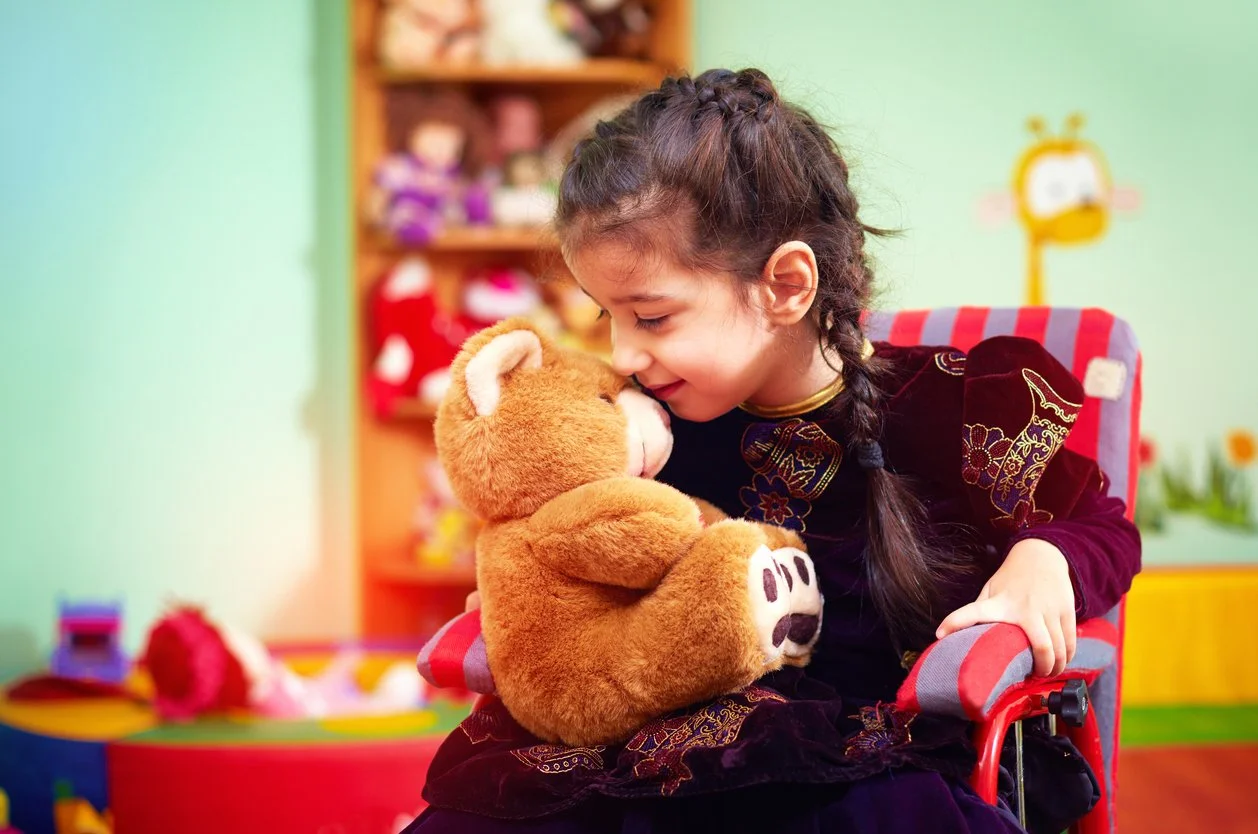
If your child has recently been diagnosed with cerebral palsy, you may be navigating a completely new world.
You may have heard:
“Start therapy as soon as possible”
“Consistency is key”
“The more you do, the better the outcome”
And you may already be doing everything you can.
Attending appointments. Following recommendations. Supporting your child every day.
But somewhere along the way, many parents begin to notice something quietly:
“My child is trying so hard… but progress feels slow.”
If that thought has crossed your mind, you are not alone.
When Effort Doesn’t Match Progress
Children with cerebral palsy are often incredibly determined.
They work hard to move. They focus deeply. They put in effort that is easy to see.
And yet, sometimes:
Movement still looks difficult
Changes take longer than expected
Progress feels inconsistent
Skills don’t always carry over into daily life
This can be confusing.
Because from the outside, it seems like more effort should lead to more improvement.
But movement is not just about effort.
It is about how the brain is organizing the body.
Understanding Cerebral Palsy Through a Brain Lens
Cerebral palsy is often described in terms of muscle tone, posture, or movement limitations.
But at its core, it is about how the brain communicates with the body.
The brain must coordinate:
Balance
Timing
Muscle activation
Sensory feedback
Spatial awareness
When that communication is disrupted or unclear, movement can become:
Stiff or rigid
Effortful
Limited in variation
Difficult to control
The child may try harder.
But if the brain does not have clear organization, effort alone may not change the outcome.
Why Traditional Therapy Can Feel Slow
Occupational Therapy (OT) and Physical Therapy (PT) are commonly recommended for children with cerebral palsy.
They often focus on:
Strengthening muscles
Practicing specific movements
Repeating functional tasks
These approaches can be helpful.
But some families begin to notice that:
Repetition does not always create ease
Movements improve in sessions but not at home
The child becomes fatigued or frustrated
Progress plateaus after initial gains
This does not mean therapy is wrong.
It may mean the brain needs a different kind of learning experience.
Movement Is a Learning Process, Not Just a Task
Every movement your child makes is the result of the brain learning how to organize the body.
This learning process depends on:
Awareness of differences
Variation in experience
The ability to adjust and refine patterns
If the brain is repeating the same pattern over and over, it may not discover new options.
That’s why more repetition does not always lead to better outcomes.
The brain needs new information.
Not just more effort.
A Different Approach to Supporting Children With Cerebral Palsy
The Anat Baniel Method® NeuroMovement® offers a different way to support children with cerebral palsy.
Rather than focusing on achieving specific movements, NeuroMovement® focuses on how the brain learns to organize movement.
At MoveAbilities in Portland, sessions are designed to:
Be gentle and non-forceful
Introduce subtle variations in movement
Help the brain notice differences
Support new patterns of organization
Reduce unnecessary effort
Instead of asking the child to push through difficulty, the goal is to help the brain discover easier ways to move.
This shift—from effort to awareness—can be meaningful.
Families can begin in ways that feel appropriate, including in-person lessons, virtual sessions, or guided movement classes.
What Parents Often Notice
When the brain begins to organize movement differently, changes often appear in subtle but important ways.
Parents may notice:
Movement becomes less rigid
Their child uses less effort to achieve the same action
Transitions feel smoother
Their child explores movement more willingly
Progress begins to feel more natural
These changes are not forced.
They emerge as the brain gains new options.
What If Progress Feels Stuck in OT or PT?
Many families begin with traditional therapy—and that is a common and understandable path.
But if you are noticing that progress feels slow or limited, it may be helpful to explore alternatives to OT and PT in Portland.
Exploring a different approach does not mean you are giving up on therapy.
It means you are expanding what is possible.
It means you are responding to your child’s experience.
Can NeuroMovement® Be Done Without OT or PT?
Yes — many families choose to focus entirely on the Anat Baniel Method® NeuroMovement® without combining it with occupational or physical therapy.
Because NeuroMovement® works directly with how the brain learns and organizes movement, it can stand on its own as a complete approach.
Some families combine approaches.
Others choose a simpler path to avoid overwhelming the nervous system.
At MoveAbilities, every plan is individualized based on what best supports your child.
Progress Can Look Different
When a child is diagnosed with cerebral palsy, it is natural to focus on outcomes.
Milestones. Skills. What comes next.
But progress does not always happen in a straight line.
Sometimes it begins with:
Less effort
More ease
Greater awareness
Increased comfort in movement
These changes may seem small.
But they can create the foundation for larger shifts over time.
You Are Already Paying Attention — And That Matters
If you are noticing that progress feels slower than expected, that awareness is important.
It means you are tuned in to your child.
It means you are seeing what is actually happening—not just what is supposed to happen.
And that awareness is what allows you to explore new possibilities.
Curious What a Different Approach Could Look Like?
If you’re in the Portland area and navigating a cerebral palsy diagnosis, you don’t have to figure everything out on your own.
You can contact Kathy at MoveAbilities to ask questions or explore what kind of support might feel right for your child.