
Should My Child Always Be Practicing?
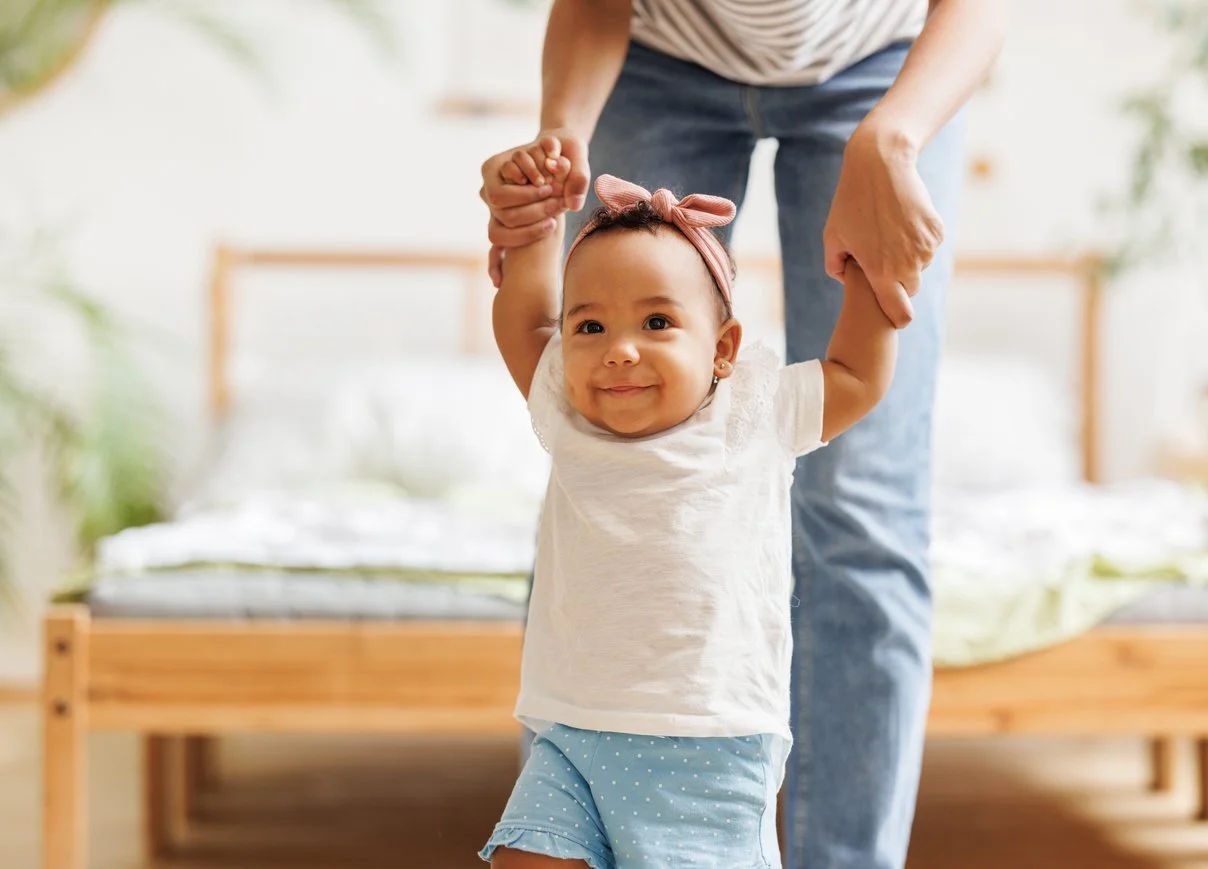
Once your child begins therapy, it can feel like everything becomes an opportunity to practice.
Getting dressed becomes fine motor practice.
Walking to the car becomes gait practice.
Playing outside becomes balance practice.
Even sitting on the floor can start to feel like something you should be correcting.
Parents are often sent home with exercises and encouraged to reinforce new skills between appointments. That can be useful. But it can also create an enormous amount of pressure.
Soon, a question starts creeping in:
“Are we doing enough?”
If your child has developmental or movement challenges, you naturally want to give them every possible opportunity to progress.
But more practice does not automatically equal more learning.
Sometimes children need opportunities to move without being corrected, rest without falling behind, and play without someone turning the experience into another exercise.
Practice Has a Place
There is nothing inherently wrong with repetition.
Once the brain has developed an effective movement pattern, repetition can help make that skill more familiar and dependable.
A child learning to ride a bicycle will probably need more than one trip around the driveway.
A new swimmer needs time in the water.
Practice can build confidence and experience.
The important question is what your child is practicing.
If a movement is already difficult, highly effortful, or poorly organized, repeating it hundreds of times doesn't necessarily teach the nervous system a better solution.
Sometimes it simply makes the existing strategy more familiar.
When Practice Starts Looking Like Work
Parents often recognize this moment before they have words for it.
Your child used to enjoy climbing onto the couch.
Now you're asking them to do it five times.
They used to play with blocks.
Now you're thinking about how the activity can work on grasping.
A walk through the neighborhood becomes an opportunity to correct gait.
Gradually, the relationship between parent and child can start feeling different.
You're no longer simply playing together.
You're watching.
Correcting.
Prompting.
Counting.
Wondering whether you're missing an opportunity to help.
That's exhausting for parents, and it can be exhausting for children too.
Children Learn While They're Playing
Watch a child who becomes fascinated by something.
They may climb onto the same object repeatedly, but each attempt isn't identical.
One time they lead with the right leg.
Another time they turn sideways.
They reach for a different handhold.
They lose their balance, adjust, and try again.
That looks like play.
From the brain's perspective, it's an incredibly rich learning experience.
The child is encountering variation.
They're solving problems.
They're noticing what happens when they move differently.
Nobody needs to say, “Three more repetitions.”
The motivation comes from curiosity.
That distinction is important because curiosity changes the quality of attention.
The Brain Needs Differences
The Anat Baniel Method® NeuroMovement® places particular importance on variation.
The nervous system learns by detecting differences.
Faster and slower.
More effort and less effort.
One direction and another.
A familiar position and a slightly different one.
Those differences give the brain information it can use to refine movement.
At MoveAbilities, the goal is therefore not to have children repeat a “correct” movement as many times as possible.
During in-person NeuroMovement® lessons, Kathy introduces gentle variations that give the child opportunities to notice and learn.
Sometimes doing something differently provides the brain with more useful information than doing the same thing ten more times.
Rest Is Not Lost Time
This can be difficult for parents to believe.
When you're worried about your child's development, taking a break can feel irresponsible.
But the nervous system isn't a machine that produces more learning simply because you keep it running longer.
Children need sleep.
They need downtime.
They need ordinary family life.
They need time when nobody is asking anything from them.
The brain continues processing experience after a learning activity has ended. A child doesn't necessarily need another round of exercises immediately after a lesson to “lock in” what happened.
Sometimes giving the nervous system room to settle is part of the process.
What About Home Exercise Programs?
If your child is receiving Occupational Therapy or Physical Therapy, you may have been given exercises to complete between appointments.
Questions about a specific home program should be discussed with the professional who prescribed it. There may be important reasons for particular recommendations, especially when a child's medical or physical needs are involved.
But if your entire family life has begun revolving around exercises, it's reasonable to have a conversation about that.
Ask:
What is this activity intended to accomplish?
How much is actually necessary?
What should I notice if it's helping?
What should I do if my child consistently becomes distressed?
Good questions don't make you an uncooperative parent.
They help you understand the purpose behind what you're being asked to do.
What If We’re Doing Everything and Progress Is Still Slow?
This is where many families become frustrated.
They attend every appointment.
They complete the exercises.
They practice faithfully.
And their child is trying incredibly hard.
Yet movement remains stiff, awkward, or exhausting.
When that happens, the instinct is often to add more.
Another appointment.
More repetitions.
A longer home program.
But if the nervous system isn't getting the information it needs to develop new movement options, increasing the amount of the same experience may not produce the change everyone is hoping for.
Families in this situation may benefit from learning about alternatives to OT and PT when a child isn't progressing as expected.
Anat Baniel Method® NeuroMovement® offers a different perspective: rather than starting with how much a child practices, it looks at the quality and variety of information available to the brain.
Let Some Play Stay Play
Not every trip to the playground needs a developmental objective.
Sometimes your child can simply swing because swinging is fun.
They can splash in a puddle without working on balance.
They can build something without you thinking about hand coordination.
They can lie on the floor and do absolutely nothing productive.
These experiences aren't separate from development.
They're part of childhood, and childhood itself contains tremendous opportunities for learning.
When children are free to explore, they encounter movement problems they would never meet in a carefully designed exercise.
They adapt.
Experiment.
Make mistakes.
Try something unexpected.
The brain gets information.
Parents Need Permission to Stop Performing, Too
There is another person affected when every moment becomes therapeutic:
You.
Parents can begin feeling responsible for producing their child's progress.
If development slows, they wonder whether they practiced enough.
If their child struggles, they question whether they should have done another exercise.
That is a tremendous burden.
You are an important part of your child's learning environment, but you do not have to become their therapist every hour of the day.
You are also their parent.
Connection matters.
Enjoyment matters.
Having a relationship that isn't organized around what your child can and cannot do matters.
A Better Question Than “How Much Should We Practice?”
Instead of always asking how many repetitions your child needs, try asking:
“Is my child discovering anything new?”
Are they finding different ways to move?
Are they becoming more curious?
Does an activity gradually require less effort?
Are they beginning to solve movement problems without being prompted?
Those questions shift the focus from performance to learning.
And learning is ultimately what allows new abilities to grow.
Looking for a Different Approach to Learning?
If your family feels caught in a cycle of appointments, exercises, and constant practice without the progress you hoped to see, another perspective may be useful.
You can contact Kathy at MoveAbilities to learn how Anat Baniel Method® NeuroMovement® uses attention, variation, and gentle movement to support learning without turning every moment of your child's day into therapy.