
Why Does My Child Seem Capable One Day and Struggle the Next?
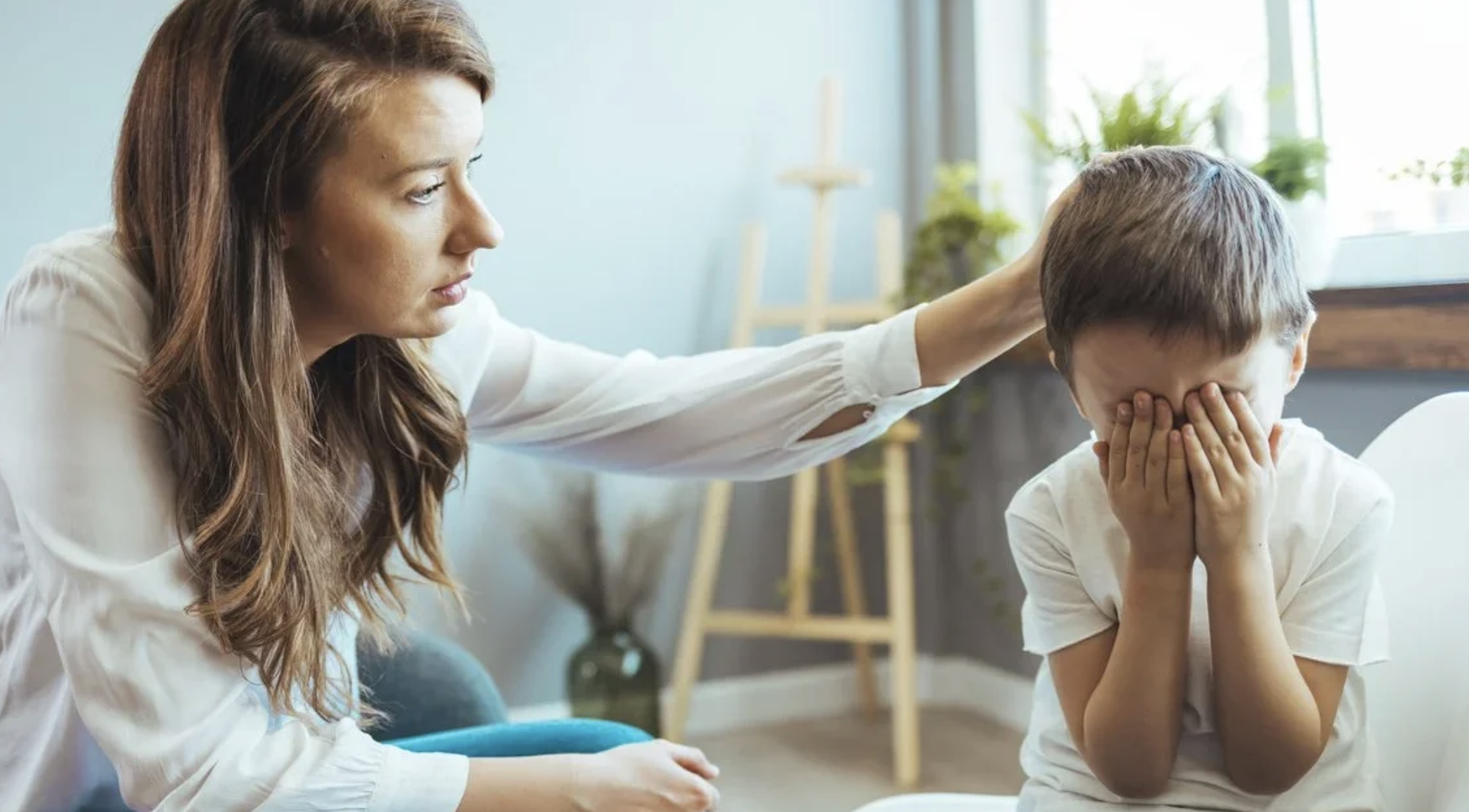
Tuesday was a great day.
Your child climbed onto the couch without help. Walking looked smoother. Getting dressed involved less frustration. Maybe they even tried something new at the playground that they had avoided for weeks.
You thought:
“Something is finally clicking.”
Then Thursday arrives, and suddenly the same things are difficult again.
Your child needs help getting off the floor. Balance seems less reliable. They avoid the playground equipment they climbed two days ago.
It can be discouraging.
Parents naturally want progress to move in one direction: forward.
But children's development rarely works that neatly.
A child doing something successfully one day and struggling with it another doesn't necessarily mean they've lost progress. Sometimes variability is part of the brain's process of learning how to make a new ability reliable.
Learning a Skill Isn't the Same as Owning It
The first time your child does something new can feel enormous.
And it is worth celebrating.
But one successful attempt doesn't necessarily mean the nervous system has fully integrated that ability.
Think about an adult learning to drive.
You might successfully parallel park during one lesson. That doesn't mean you'll perform it effortlessly the next time you're downtown with traffic behind you and someone waiting for your parking space.
The skill exists.
It just isn't completely automatic yet.
Children experience something similar with movement.
A new ability may appear under the right circumstances before the brain can reliably reproduce and adapt it everywhere.
The Conditions Are Never Exactly the Same
Parents sometimes compare two moments as though everything except the child's performance stayed constant.
But consider how many things may have changed.
Your child might be:
More tired than yesterday
Distracted by noise
Excited about something else
Wearing different shoes
Moving on another surface
Recovering from an illness
Hungry
Adjusting to an unfamiliar environment
Even the movement itself isn't identical.
Climbing familiar stairs at home isn't exactly the same problem as navigating playground steps with different heights and spacing.
A nervous system with many movement options can adapt.
A child who has only recently discovered a successful strategy may have more difficulty when the circumstances change.
Consistency Isn't the Only Sign of Progress
Parents understandably look for consistency.
“My child did it yesterday. Why aren't they doing it today?”
But early in the learning process, another quality can be equally interesting:
variation.
Maybe your child tries three different ways to get off the floor instead of always relying on one.
Perhaps they lose their balance but discover a new way to recover.
Maybe they don't complete the task at all, but they approach it differently.
From the outside, those moments might not look like progress.
From a learning perspective, the brain may be experimenting.
That experimentation matters.
The Brain Needs Options, Not Just One Correct Answer
Imagine driving to work and knowing exactly one route.
As long as nothing changes, you're fine.
Then construction closes a road.
If you know the surrounding streets, you adjust.
If you know only the memorized route, you're stuck.
Movement can be similar.
A child may discover one way to stand up, maintain balance, reach for an object, or navigate stairs.
That solution can work beautifully until circumstances change.
Greater adaptability comes from having more possibilities available.
This is one reason simply repeating the same movement isn't always the same as developing flexible movement.
Why NeuroMovement® Uses Variation
Variation is central to the Anat Baniel Method® NeuroMovement®.
At MoveAbilities, the objective isn't to have a child reproduce one “correct” movement again and again.
Instead, gentle variations give the brain opportunities to notice differences.
During in-person lessons, Kathy may explore movement in ways that look surprisingly subtle from the outside.
The purpose isn't random movement.
It's information.
When the nervous system can distinguish between different sensations, positions, directions, and possibilities, it has more information available for organizing future action.
The goal is not simply for the child to succeed once.
It's to help the brain become better at finding solutions.
What Does Real-Life Progress Look Like?
Sometimes progress appears in ways that don't fit neatly on a milestone chart.
Your child may still stumble, but recover without falling.
They may need help climbing onto something, but participate instead of avoiding it.
They may attempt an unfamiliar movement without becoming immediately frustrated.
You might notice that your child:
Experiments more
Recovers more easily from mistakes
Moves in more than one way
Needs less prompting
Handles unfamiliar environments better
Becomes more willing to explore
Those changes may eventually lead to more consistent skills.
But they can be valuable developments in their own right.
What If My Child Only Performs the Skill During Therapy?
This is a different kind of inconsistency, and one parents often find frustrating.
Your child completes an activity during Occupational Therapy or Physical Therapy.
The therapist sees it.
You see it.
Then you get home and the skill seems to disappear.
That doesn't necessarily mean the session accomplished nothing.
But it does raise a useful question:
Has my child learned a flexible ability, or learned how to succeed under a very specific set of conditions?
A skill becomes far more useful when the child can adapt it to daily life.
For parents seeing progress during sessions that isn't consistently carrying over, learning about alternatives to OT and PT in Portland can provide another perspective on how the brain develops adaptable movement.
Some families use Anat Baniel Method® NeuroMovement® alongside existing services, while others choose it as a different path.
Resist the Urge to Test Your Child
When a new ability appears, parents understandably get excited.
Then comes the temptation:
“Show Grandma what you did!”
“Do it again.”
“You did this yesterday. Come on, try.”
That enthusiasm comes from love.
But constantly testing a new ability can change the experience for a child.
What began as spontaneous discovery can suddenly become a performance.
Instead of repeatedly checking whether the skill is “still there,” sometimes it's better to give your child opportunities to use it naturally.
Let the brain continue experimenting.
You may be surprised where the skill appears next.
When Inconsistency Is Worth Discussing
Developmental variability is common, but significant changes in a child's abilities should not simply be dismissed.
If your child loses abilities they previously used consistently, or you notice a substantial or concerning change in movement, behavior, communication, or health, discuss it with your child's pediatrician or appropriate healthcare professional.
NeuroMovement® does not replace medical evaluation.
There is an important difference between a developing skill being inconsistent and a child losing an established ability.
Parents don't need to diagnose that distinction themselves. When something concerns you, bring it up.
Look at the Direction, Not Just the Day
One difficult day can feel enormous when you've been watching your child's development closely.
Try widening the view.
Compare this month with three months ago rather than comparing Thursday with Tuesday.
Is your child exploring more?
Are there more movement options?
Are unfamiliar situations becoming easier?
Does frustration resolve more quickly?
Are abilities beginning to show up in more places?
Development can look messy up close.
The larger pattern often tells you much more.
Want to Understand What You're Seeing?
If your child's abilities seem to come and go, the answer isn't necessarily more drilling or trying to make them reproduce yesterday's success.
Sometimes the nervous system needs more opportunities to explore, differentiate, and make new learning more adaptable.
If you're in the Portland area, you can contact Kathy at MoveAbilities to discuss what you're noticing and learn more about Anat Baniel Method® NeuroMovement®.