
Why Does My Child Seem More Comfortable Here Than in Therapy?
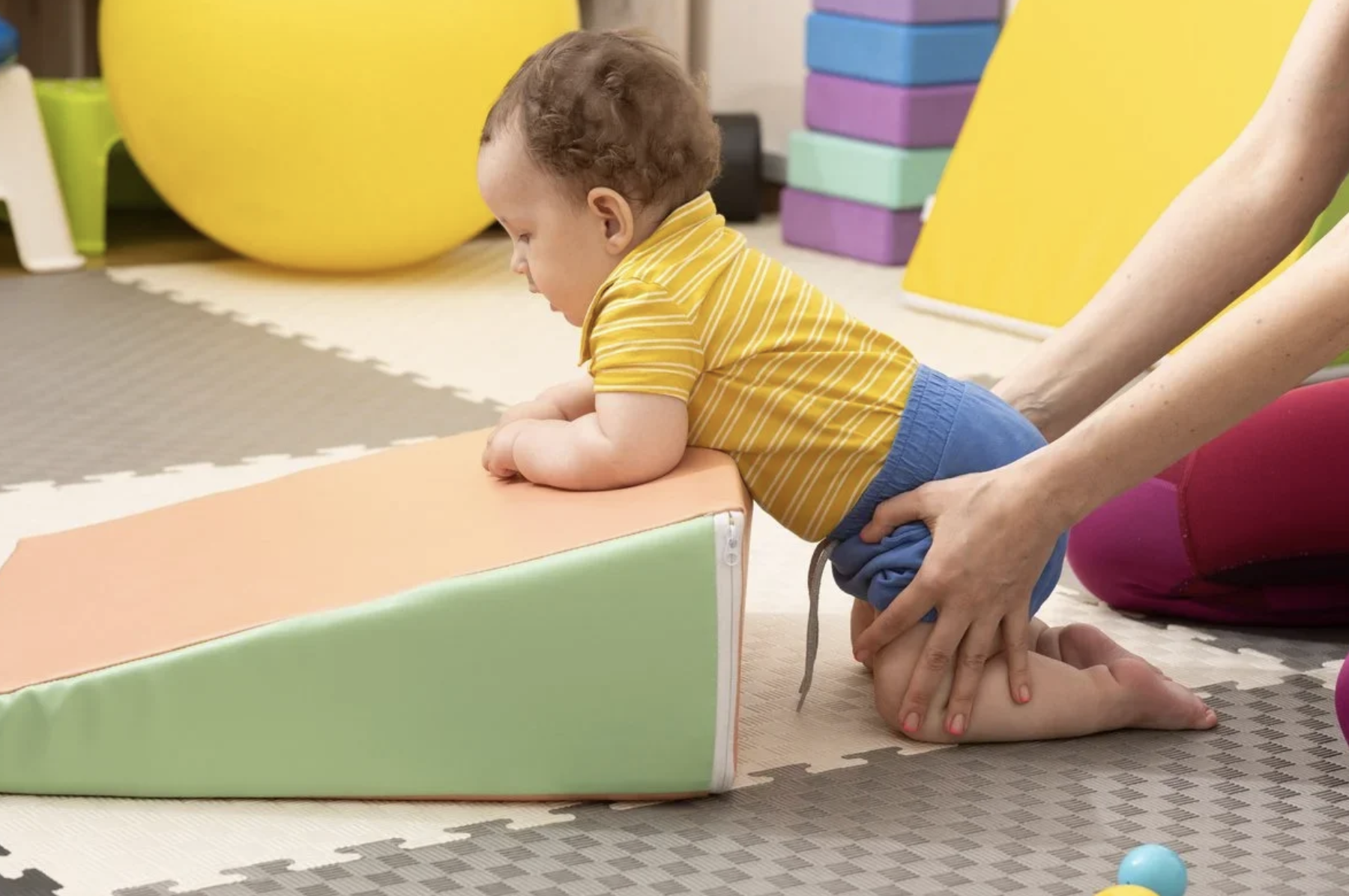
One of the most common things parents tell us after their child's first few lessons is something they weren't expecting.
They say:
"This is the calmest I've ever seen my child during something like this."
Or:
"Usually my child is exhausted after therapy, but today they seemed relaxed."
Sometimes parents even wonder if that means enough is happening.
After all, many of us have been taught that progress comes from working harder, practicing more, and pushing through challenges.
But when it comes to how the brain learns, that's not always the case.
If your child seems more comfortable during Anat Baniel Method® NeuroMovement® lessons than they do in traditional therapy, there are good reasons why—and those reasons may actually support learning.
Comfort Doesn't Mean Nothing Is Happening
It's easy to assume that if a child isn't sweating, struggling, or concentrating intensely, they aren't learning.
In reality, think about how adults learn something new.
If you're anxious, overwhelmed, or constantly worried about making mistakes, it's difficult to absorb new information.
When you're curious, relaxed, and engaged, learning often comes much more naturally.
Children's brains work the same way.
Learning doesn't require constant stress.
In many cases, the opposite is true.
The Nervous System Learns Best When It Feels Safe
Every movement begins in the brain.
Before your child reaches for a toy, climbs onto a chair, or takes a step, their nervous system is organizing an enormous amount of information.
If the nervous system feels overwhelmed, it naturally shifts its attention toward coping instead of learning.
That can look like:
Pulling away from activities
Becoming frustrated quickly
Refusing to participate
Melting down during sessions
Appearing distracted or disconnected
These behaviors aren't necessarily signs that a child doesn't want to learn.
They may simply be signs that learning has become difficult under the current circumstances.
Why Some Children Resist Therapy
Parents often feel discouraged when their child cries before appointments or refuses to participate.
It's easy to wonder:
"Are they just being stubborn?"
More often, children are communicating something important.
They may be saying:
"This feels too hard."
"I don't understand what's being asked."
"I'm overwhelmed."
"I don't feel successful."
Children usually want to succeed.
When learning experiences consistently feel frustrating, many begin protecting themselves by avoiding those situations.
That isn't laziness.
It's a normal response from the nervous system.
A Different Learning Environment
The Anat Baniel Method® NeuroMovement® creates a different type of learning experience.
Rather than emphasizing repetition or correcting mistakes, lessons encourage children to notice new possibilities.
At MoveAbilities, the focus is on helping the brain receive meaningful information through gentle movement, curiosity, and exploration.
Children are not expected to "push through."
Instead, they are invited to discover.
That difference often changes how they experience learning.
Families can explore this approach through in-person lessons, virtual sessions, or educational movement classes.
Less Pressure Can Lead to Better Learning
Many parents are surprised that lessons don't look especially intense.
There may not be constant instruction.
There may not be repetitive drills.
There may not be obvious "work."
Instead, children are experiencing subtle movement variations that help the brain notice new information.
The brain learns by detecting differences.
When it recognizes new possibilities, it begins building more flexible movement patterns.
Sometimes those quiet moments of exploration create more lasting learning than hours of repetition.
Why Children Often Become More Engaged
When movement begins feeling easier, children frequently become more willing to participate.
Parents often notice:
More smiles during lessons
Greater curiosity
Increased willingness to try new movements
Less frustration
More confidence
These changes aren't simply emotional.
They often reflect a nervous system that is beginning to organize movement more efficiently.
As learning becomes easier, participation often improves naturally.
Does Calm Mean Slower Progress?
Not at all.
Many people assume that challenging learning must always look difficult.
But consider how young children naturally learn.
They explore.
They experiment.
They repeat things because they're interested—not because someone tells them they have to.
The Anat Baniel Method® NeuroMovement® works with those natural learning processes.
Instead of relying on pressure, it encourages the brain to become more adaptable.
As adaptability grows, many children begin developing new abilities that extend well beyond the lesson itself.
What If My Child Is Already in OT or PT?
Many families who come to MoveAbilities continue participating in Occupational Therapy or Physical Therapy.
Others are exploring different options because progress has slowed or therapy has become stressful.
There is no one right answer for every family.
Some children benefit from combining approaches.
Others thrive with a different learning experience.
If your child continues working very hard without seeing the progress you hoped for, it may be worth learning more about alternatives to OT and PT in Portland.
Exploring another approach doesn't mean abandoning the work you've already done.
It simply means giving yourself more information.
Learning Should Build Confidence
One of the most meaningful changes parents often notice isn't a specific physical milestone.
It's confidence.
Children who once avoided movement may begin exploring more freely.
Children who hesitated may begin trying new things.
Children who expected failure may begin expecting success.
Confidence grows when children experience learning as something they can enjoy rather than something they have to endure.
That confidence often carries into many areas of daily life.
Every Child Learns Differently
No single therapy is the perfect fit for every child.
Some children thrive with highly structured programs.
Others make greater progress when learning feels gentle, flexible, and curiosity-driven.
The important question isn't whether one approach is universally better than another.
The important question is:
"What helps my child learn best?"
When parents begin asking that question, they're often better equipped to find an approach that supports not only new skills, but a lifelong love of learning.
Curious Whether NeuroMovement® Could Help?
If your child seems overwhelmed by traditional therapy or you're looking for a gentler, brain-based approach to movement and learning, MoveAbilities is here to help.
You can contact Kathy at MoveAbilities to learn more about the Anat Baniel Method® NeuroMovement®, ask questions, and discover whether it may be a good fit for your child.