
Will My Child Ever Move Naturally Without Thinking About Every Step?
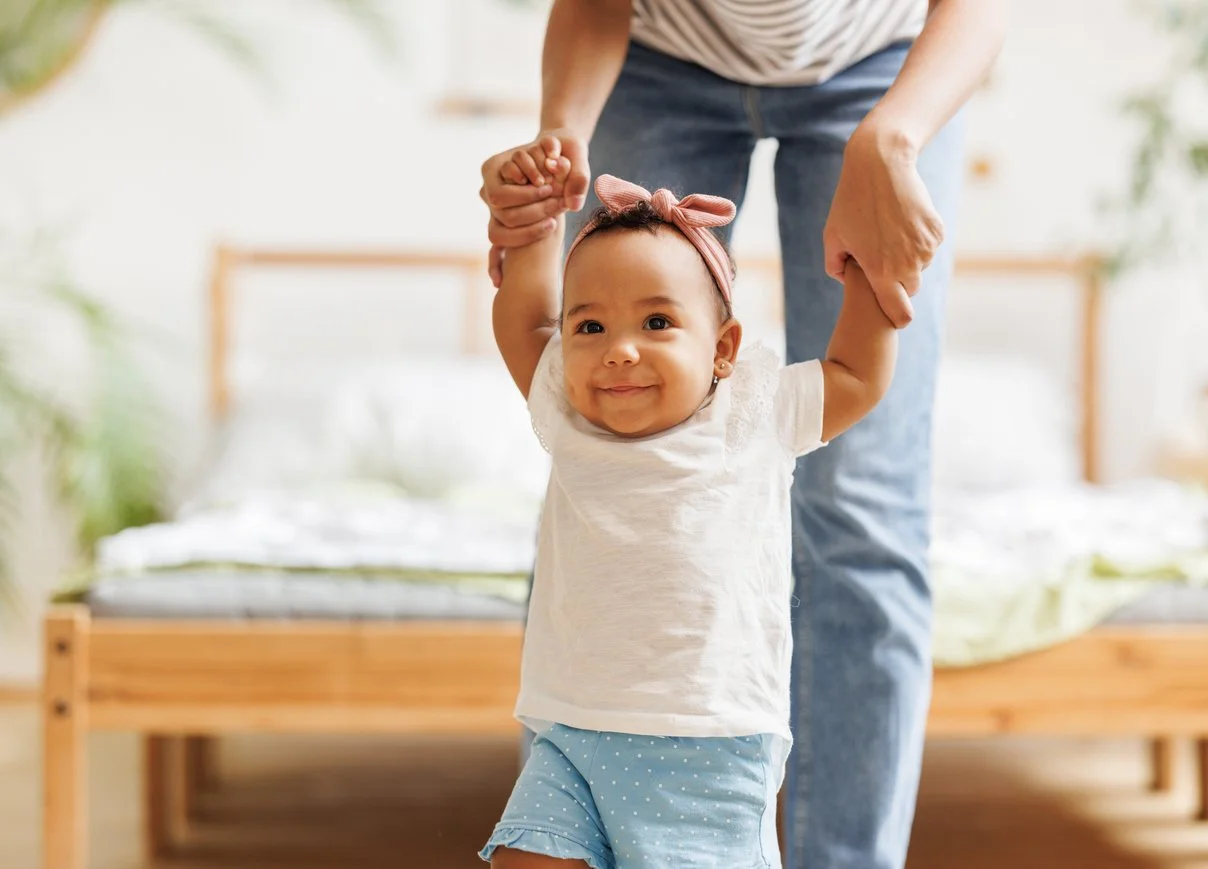
Have you ever watched your child do something simple—walk across the room, climb onto the couch, or step over a curb—and thought:
"It looks like they're thinking through every single movement."
Many parents describe exactly that.
Their child can complete the task, but it doesn't look easy.
Every movement seems carefully planned.
There are long pauses before getting started.
Balance requires intense concentration.
Even everyday activities appear to take an enormous amount of effort.
If this sounds familiar, you may wonder whether movement will ever become automatic.
The encouraging news is that many children can develop more fluid, natural movement as their nervous systems learn to organize themselves more efficiently.
Most People Don't Think About Walking
Think about how you walk through your home.
You probably don't consciously tell yourself:
Lift your foot.
Shift your weight.
Bend your knee.
Keep your balance.
Swing your arms.
Your brain organizes all of those actions automatically.
It isn't because you memorized each step.
It's because your nervous system has developed efficient movement patterns over time.
For some children, however, that organization is still developing.
As a result, movements that feel automatic for others require significant thought and attention.
Why Everything Can Feel So Deliberate
Parents often notice that their child:
Watches their feet while walking.
Hesitates before stepping onto playground equipment.
Stops to think before changing direction.
Moves very carefully on uneven ground.
Appears stiff during everyday activities.
These children are often doing far more mental work than anyone realizes.
Their brains are processing balance, posture, coordination, timing, and body awareness all at once.
That isn't a lack of motivation.
It's a sign that movement is still requiring a great deal of conscious organization.
The Goal Isn't Faster Movement
When parents notice this extra effort, it's natural to hope their child will simply move faster.
But speed isn't the real goal.
The goal is efficiency.
As the brain becomes better organized, movement often becomes:
Smoother.
More adaptable.
Less tiring.
More comfortable.
More spontaneous.
Children don't simply move faster.
They move with less effort.
That's an important difference.
Automatic Movement Is Learned
Many everyday abilities begin with conscious effort.
Think about learning to ride a bicycle.
At first, every action requires concentration.
Balance.
Pedaling.
Steering.
Looking ahead.
It feels overwhelming.
Eventually, those separate pieces come together.
The brain no longer has to think about every detail.
Movement becomes natural.
Children with developmental challenges are capable of learning in this way, too.
Sometimes they simply need different learning experiences that help the nervous system discover more efficient ways to organize movement.
Helping the Brain Become More Adaptable
The Anat Baniel Method® NeuroMovement® focuses on improving the brain's capacity to learn.
Rather than practicing one movement repeatedly, lessons help children experience many small variations in movement.
At MoveAbilities, these gentle lessons are designed to help the nervous system:
Recognize new possibilities.
Improve coordination.
Reduce unnecessary effort.
Build greater flexibility.
Develop more efficient movement organization.
As the brain discovers better ways to organize movement, children often begin moving with less conscious effort.
Families can explore this approach through in-person lessons, virtual sessions, or educational movement classes.
Looking for Small Changes
Parents sometimes expect progress to appear as one dramatic breakthrough.
More often, meaningful learning shows up in small ways first.
You might notice your child:
Starts climbing the stairs without stopping first.
Looks ahead instead of constantly watching their feet.
Recovers more easily after losing their balance.
Tries a new playground activity without encouragement.
Moves through daily routines with a little less hesitation.
Each of these changes suggests the brain is becoming more adaptable.
Those small improvements often build on one another over time.
When Therapy Doesn't Seem to Become Easier
Many families come to MoveAbilities after months or years of Occupational Therapy (OT), Physical Therapy (PT), or other developmental services.
They appreciate the support they've received.
But they also notice something important.
Even after significant practice, movement still seems incredibly hard.
Their child can complete certain tasks during therapy, yet everyday life still requires tremendous concentration.
If this sounds familiar, it may be helpful to learn more about alternatives to OT and PT in Portland.
Sometimes the next step isn't more repetition.
Sometimes it's helping the brain organize movement differently.
Trust the Changes You Notice at Home
Parents often see progress long before anyone measures it.
You may notice that mornings feel a little easier.
Your child seems less frustrated getting dressed.
They recover from small stumbles without becoming upset.
They begin exploring instead of avoiding movement.
These everyday observations are meaningful.
They show how learning is affecting real life—not just what happens during an appointment.
Sometimes those subtle changes are the strongest signs that the nervous system is becoming more organized.
Progress Doesn't Have to Look Perfect
Every child develops at their own pace.
There isn't a moment when movement suddenly becomes effortless overnight.
Instead, many families describe gradual changes.
Movement begins looking smoother.
Confidence grows.
Everyday activities become less exhausting.
Children spend less time thinking about how to move and more time enjoying what they're doing.
That's the kind of progress many parents hope for—not perfection, but greater ease and freedom.
Curious Whether NeuroMovement® Could Help?
If your child seems to think through every movement and you're wondering whether everyday activities can become easier, MoveAbilities is here to help.
You can contact Kathy at MoveAbilities to learn more about the Anat Baniel Method® NeuroMovement®, ask questions, and explore whether it may be the right fit for your child.